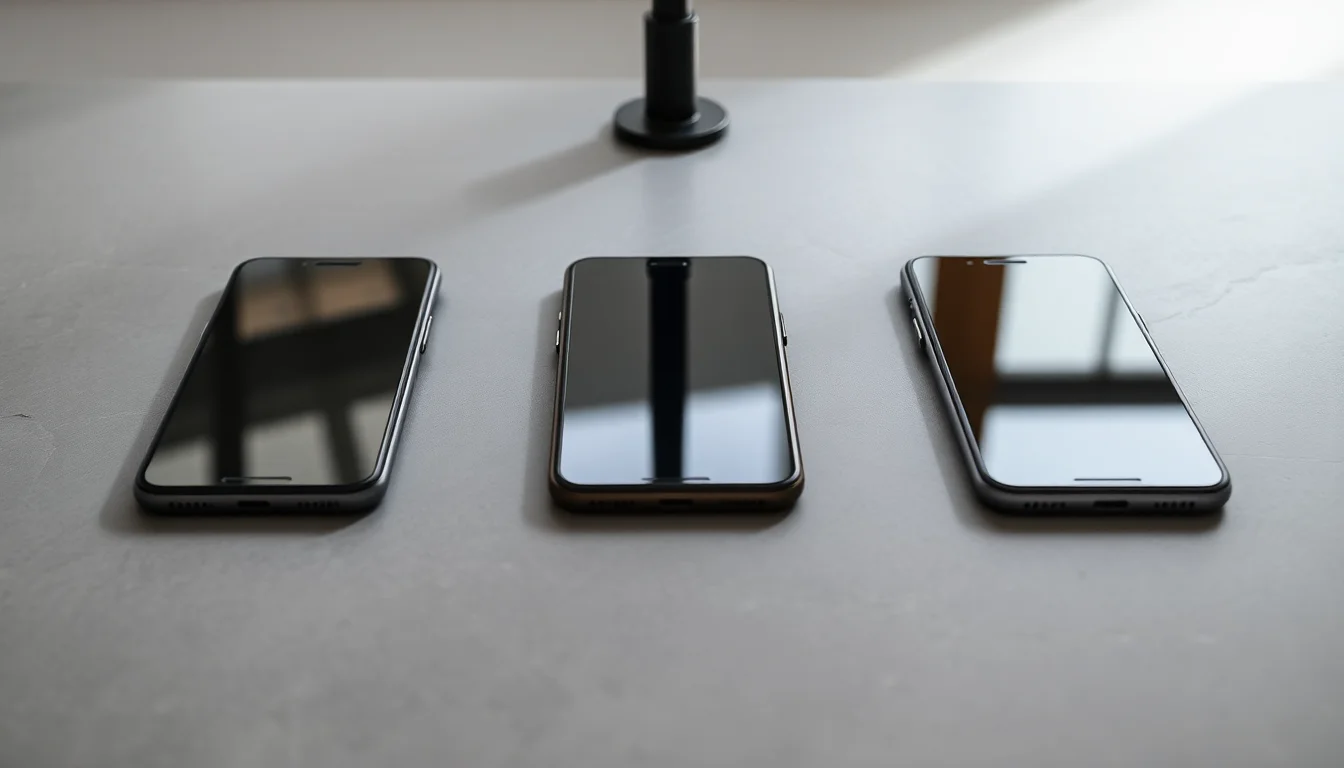

iPhone 17 vs Pixel 10 vs Galaxy S26: Which Flagship Wins in 2026?
If you’re shopping for a top-tier smartphone (a “flagship” — industry shorthand for a brand’s best, most expensive phone) right now, you’ve probably narrowed it down to three names: Apple’s iPhone 17, Google’s Pixel 10, or Samsung’s Galaxy S26. All three cost between $799 and $1,199 before any deals. All three are genuinely excellent. The problem is that “excellent in different ways” is not helpful when you’re standing in a carrier store on a Saturday with a trade-in offer expiring Monday.
This article breaks the decision down into the five things that actually matter over a 3-year ownership window: what you’ll really pay after trade-in, camera quality, battery life, how long the phone gets security updates (critical for safety and resale value), and what repairs cost when something goes wrong. By the end, you’ll have a clear answer for your specific situation — not just a list of specs.
The Real Price: What You’ll Pay After Trade-In and Carrier Deals
Sticker price is almost a fiction in 2026. Every carrier is running some version of “get up to $800 off” on a new flagship when you trade in your old phone and sign a 36-month installment plan. Here’s what that actually means in plain English: you don’t pay $1,099 upfront, but you’re committed to that carrier for three years, and leaving early means paying off the remaining device balance. That’s not inherently bad — just know what you’re signing.
Base retail prices (unlocked, no carrier deal, May 2026):
| Phone | Base Price | Mid-Tier Model | Top Storage |
|---|---|---|---|
| iPhone 17 | $799 | $999 (Pro) | $1,199 (Pro Max) |
| Google Pixel 10 | $799 | $999 (Pro) | $1,099 (Pro XL) |
| Samsung Galaxy S26 | $849 | $1,049 (+) | $1,249 (Ultra) |
For an apples-to-apples comparison, we’re focusing on the base models ($799–$849) and mid-tier Pro/Plus models ($999–$1,049) — the ones most people actually buy.
Trade-in reality check: A 3-year-old flagship (iPhone 14, Pixel 7, Galaxy S23) trades in for roughly $200–$400 at retail and $350–$600 via carrier promotions during launch windows. Trade-in values drop fast after 60–90 days post-launch, so if you’re going to trade, do it now. Waiting until fall cuts the value by an estimated 15–25% based on historical depreciation patterns tracked by Swappa and SellCell.
Best current carrier deals (as of May 2026): T-Mobile and Verizon are both running $700 off iPhone 17 and Galaxy S26 with eligible trade-in on unlimited plans. Google’s own store is offering $500 off Pixel 10 Pro with any trade-in plus a free Pixel Watch 4 — which shifts the value equation if you were already considering a smartwatch.
Bottom line on price: After trade-in, most buyers in this tier land between $300–$600 out of pocket (or $10–$18/month on a carrier plan). The Pixel 10 has the best flat-dollar trade-in deal right now through Google’s own store. The Galaxy S26 Ultra carries the highest sticker price but also the highest trade-in ceiling if you’re coming from a recent Samsung.
Camera: Where Each Phone Actually Wins
Camera is the most-cited reason people upgrade, and the honest answer in 2026 is: all three are remarkable, and the differences are about style more than quality. But style matters when you’re the one looking at your photos every day.
iPhone 17: Apple’s computational photography (software that automatically enhances images the moment you take them) produces the most consistent, true-to-life colors. Skin tones especially are handled with precision that requires zero editing. The new 48MP front camera is a legitimate upgrade for video calls and selfies. Apple’s video capabilities remain the industry benchmark — if you shoot any amount of video, the iPhone’s log format (a color profile that gives you more editing flexibility) is genuinely ahead.
Google Pixel 10: The Pixel has been the camera phone for photographers who care about low-light and computational detail since the Pixel 6, and the Pixel 10 continues that. Its “Best Take” and “Photo Unblur” AI (artificial intelligence) features are the most practically useful of any phone on this list — they fix bad photos after the fact rather than just preventing them. The Pixel 10 Pro’s 5x optical zoom (a physical lens zoom, not digital cropping) is a significant advantage over the iPhone 17 base model’s 2x. Google’s Pixel camera team has detailed their Tensor G5 chip’s image processing pipeline as specifically optimized for night mode and motion blur reduction.
Samsung Galaxy S26: Samsung’s cameras produce the most “vivid” results — punchy, saturated, Instagram-ready straight out of the camera app. This is a feature or a bug depending on your taste. Colors are boosted, skies look more dramatic, and the 200MP sensor on the Ultra model captures extraordinary detail. The S26’s zoom range (up to 10x optical on the Ultra) is unmatched in this comparison. If you frequently shoot subjects at a distance — kids at a school play, wildlife, sports — Samsung has the reach advantage.
One-line verdicts:
- Best for photos: Pixel 10 Pro (especially low-light and fixing imperfect moments)
- Best for video: iPhone 17 Pro
- Best for zoom / distance shots: Galaxy S26 Ultra
- Best point-and-shoot consistency: iPhone 17 base model
Battery Life and Charging: The Practical Daily Reality
Nobody ever says “I wish my phone died faster.” Here’s where the three land:
By the numbers (screen-on time, typical mixed-use, published lab tests):
- Galaxy S26+: ~8.5 hours screen-on time; 45W wired charging (0–50% in ~30 minutes)
- Pixel 10 Pro: ~8 hours screen-on time; 30W wired, 23W wireless charging
- iPhone 17 Pro: ~7.5 hours screen-on time; 30W wired, 25W MagSafe wireless
Samsung wins on raw battery endurance and charging speed. The S26 Ultra’s 5,000mAh battery (a measure of how much charge the battery holds) is the largest in this comparison, and 45W fast charging means a 15-minute plug-in adds roughly 3–4 hours of use.
Apple has historically lagged on charging speed compared to Android competitors — the iPhone 17 charges faster than previous iPhones, but it still can’t match Samsung’s pace. Apple compensates with extremely efficient chip performance; the iPhone 17 wastes less battery doing the same tasks, which partially closes the gap in real-world use.
The Pixel 10 sits in the middle. Battery life is solid but not exceptional; where Google earns points is Adaptive Battery (software that learns your habits and throttles background activity), which extends practical daily life over time.
Verdict for battery: If you travel, work long days, or just hate hunting for outlets — Galaxy S26. If you’re a heavy MagSafe/wireless charger user — iPhone 17. Pixel 10 is fine for most people, just not the leader.
Software Support: The Number Most People Ignore (and Shouldn’t)
Software support means how long the manufacturer sends security updates — patches that fix vulnerabilities hackers could use to access your phone. When updates stop, your phone isn’t immediately broken, but it becomes increasingly risky to use for banking, email, and anything with a password.
This matters enormously for resale value and for people who keep phones 3–5 years.
- Apple iPhone 17: Apple doesn’t publish a firm end-date, but based on Apple’s historical support policy, iPhones typically receive 5–6 years of iOS updates. The iPhone 17 should be supported through at least 2030–2031.
- Google Pixel 10: Google has committed to 7 years of Android OS and security updates for Pixel 9 and later devices — the Pixel 10 carries the same commitment, meaning support through approximately 2032. This is the longest guaranteed support window in Android.
- Samsung Galaxy S26: Samsung extended its update commitment to 7 years for Galaxy S-series phones starting with the S24 generation. The S26 is covered through approximately 2032.
The real-cost implication: A phone supported until 2032 has a longer usable life than one supported until 2030. If you’re the type to keep a phone 4–5 years, the Pixel 10 and Galaxy S26 both edge out iPhone on paper — though Apple’s real-world longevity record is strong even past official end-dates.
Repairability and Long-Term Ownership Cost
iFixit’s teardown database is the gold standard for repairability scores, and the 2026 flagship landscape looks like this:
- iPhone 17: Apple expanded its Self Repair program significantly; screen replacements are available at Apple Stores, authorized repair centers, and via DIY kits. A cracked screen runs $229–$329 without AppleCare+. With AppleCare+ ($9.99/month), screen repairs drop to $29. Battery replacement: $89 out of warranty.
- Google Pixel 10: Google and iFixit have a formal partnership — genuine replacement parts and repair guides are publicly available. Screen repair runs approximately $199 at uBreakiFix/Asurion. Battery replacement: ~$79. This is the most repairer-friendly phone on this list.
- Samsung Galaxy S26: Samsung has expanded its repair program, but proprietary adhesives and fused components make DIY harder than Pixel. Screen repair: $249–$299 at Samsung authorized centers. Battery: $99.
If repairability and long-term cost matter to you — because you’re buying for a teenager, because you’re keeping this phone 4+ years, or because you’ve cracked two phones in the last three years — Pixel 10 is the pragmatic choice. Per Consumer Reports’ smartphone longevity analysis, out-of-pocket repair cost over a 4-year ownership window averages $180–$320 depending on device, making warranty and repair access a real budget factor.
The Decision Framework: If X, Then Y
Here’s the honest, no-hedging verdict by use case:
If you’re already in the Apple ecosystem (Mac, iPad, AirPods, Apple Watch): Get the iPhone 17. Switching to Android means losing iMessage, AirDrop, Handoff, and a dozen other conveniences. The migration friction is real. The iPhone 17 is the best iPhone ever made, and that’s enough.
If camera quality and AI photo tools matter most: Get the Pixel 10 Pro. The software is smarter, the low-light shots are better, and the $999 price point with Google’s current trade-in deal makes it the best value in this comparison right now.
If you want the biggest screen, the best zoom, the longest battery, and don’t mind Samsung’s software layer (called One UI): Get the Galaxy S26+ or Ultra. It’s the most hardware for the money at the high end, and Samsung’s 7-year update promise makes it a legitimate long-term investment.
If you’re buying for a teenager or someone keeping the phone 5+ years: Lean toward Pixel 10 for repairability and the longest Android support timeline, or iPhone 17 if their friend group is heavily iMessage-dependent (a real social consideration for teens).
If you’re not sure and just want the safe, reliable pick: The iPhone 17 base model at $799 with a carrier trade-in deal is the lowest-friction choice for most people. It’s not the most exciting answer, but “boring and right” beats “exciting and wrong” every time.
Prices and carrier deals current as of May 17, 2026. Trade-in values fluctuate weekly — check Google’s trade-in estimator, Samsung’s trade-in portal, and your carrier’s current promotions before committing. Affiliate links above support this site at no cost to you.